English
 Español
 日本語
日本語 Deutsch
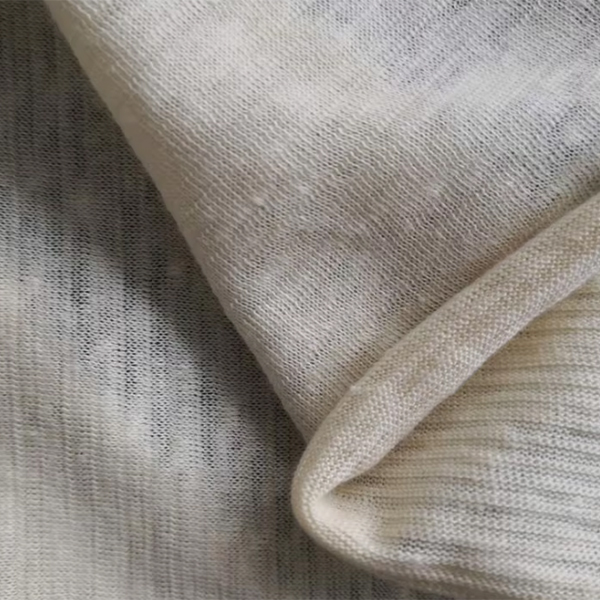

How wrinkle-prone are linen blend knit textile fabrics compared to pure linen or cotton knits?
Introduction
In the ever-evolving landscape of textile materials, the quest for the perfect balance between aesthetic appeal, comfort, and practical performance is perpetual. Among the myriad of options available to designers, manufacturers, and consumers, linen blend knit textile fabrics have carved out a significant niche, celebrated for their unique combination of natural elegance and enhanced functionality. A central question that arises when considering these fabrics for apparel or home goods is their performance regarding wrinkling. Wrinkling is not merely a superficial concern; it impacts the perceived quality of a garment, the ease of care for the end-user, and the overall longevity and appearance of the textile product.
The inherent characteristics of linen fiber, derived from the flax plant, are both its greatest strength and its primary challenge. Pure linen is renowned for its moisture-wicking and breathability properties, its naturally elegant and textured appearance, and its functional characteristics such as antibacterial and antistatic features. However, its low elasticity and high rigidity often translate to a pronounced tendency to crease. Cotton, while also a natural cellulosic fiber, possesses a different structural makeup, granting it more flexibility and a different wrinkle profile. When linen is blended with other fibers—such as cotton, rayon, or elastane—and constructed using knit technology, a transformation occurs. The resulting linen blend knit textile fabric is a sophisticated material that aims to preserve the beloved qualities of linen while mitigating its less desirable aspects, particularly its stiffness and proneness to wrinkling.
The production of high-quality linen knits is a technically demanding process. The unique molecular structure of linen fibers, including their high crystallinity and orientation, as well as the presence of impurities like pectin and lignin within the fibers, presents challenges in knitting processes. These challenges include limited elongation, insufficient elasticity, and increased knitting difficulty. Therefore, specialized pretreatment procedures are essential for optimizing fiber performance and enhancing the yarn’s knitting adaptability. This is a crucial step in ensuring the quality of the final fabric. Subsequent scouring and bleaching processes are meticulously carried out to effectively remove impurities and natural pigments, laying a solid foundation for later stages. Furthermore, to address potential discomforts associated with linen, such as slight itching, the softening finishing process is prioritized. This utilization of advanced techniques significantly enhances the hand-feel and wearing comfort of the linen blend knit textile fabric, making it more suitable for a wider range of applications, including close-fitting garments. This intricate manufacturing journey directly influences how the fabric behaves, including how it forms and releases wrinkles.
1. The fundamental properties of fibers: linen versus cotton
To comprehend why different textiles wrinkle, one must first understand the intrinsic properties of the fibers from which they are spun. The molecular and physical structures of linen and cotton, while both plant-based and cellulosic, are distinctly different, leading to divergent behaviors when subjected to stress and moisture.
Linen fiber structure and its implications
Linen fiber is sourced from the bast of the flax plant. Its structure is highly organized and crystalline. The cellulose chains within a linen fiber are aligned almost perfectly parallel to the fiber’s axis, a characteristic known as high orientation. This structure, combined with a high degree of polymerization, makes the linen fiber exceptionally strong—one of the strongest natural fibers available. However, this strength comes with a trade-off in flexibility. The tightly packed, crystalline structure offers few points for the chains to move and slide past one another when a bending force is applied. Consequently, when the fiber is bent or crushed, the hydrogen bonds between cellulose molecules break and reform in new positions, creating a permanent deformation that manifests as a wrinkle or crease. Furthermore, linen has a low elastic recovery, meaning it has a limited ability to return to its original shape after the deforming force is removed. This fundamental property is the primary reason for the characteristic wrinkled appearance of pure linen fabrics, which is often embraced as a part of its natural, rustic charm but can be a drawback in applications requiring a crisp, smooth look.
Cotton fiber structure and its implications
Cotton fiber, in contrast, grows in the boll around the seeds of the cotton plant. Its structure is less crystalline and more amorphous than that of linen. The cellulose fibrils in cotton are arranged in a spiral fashion, creating a more convoluted and flexible structure. This natural crimp and lower crystallinity allow the molecular chains more freedom to move. When cotton is bent, the hydrogen bonds also break and reform, but the overall structure is more forgiving. While cotton is certainly not immune to wrinkling, its recovery is generally better than that of linen due to its greater elasticity and resilience. It can absorb a certain amount of deformation without forming a permanent crease as readily as linen. The wrinkle behavior of cotton can also vary significantly based on the length and quality of the staple fibers; longer-staple cottons like Egyptian or Pima cotton tend to produce smoother, more lustrous, and less wrinkle-prone fabrics than shorter-staple varieties.
The moisture factor
Both fibers are hydrophilic, meaning they readily absorb moisture. Water acts as a plasticizer for cellulosic fibers, temporarily weakening the hydrogen bonds between cellulose molecules. This makes the fibers more pliable and easier to deform. When a garment is worn, body heat and perspiration create a moist, warm environment. If the garment is then bent at the knee or elbow, for example, the fibers are in a weakened state and are more likely to form set-in wrinkles as they dry. Linen’s high absorbency means it is particularly susceptible to this effect. However, it also releases moisture very quickly, which is a key part of its cooling sensation. The interplay of absorbency and drying speed plays a complex role in the final wrinkle appearance of a fabric.
In summary, the battle against wrinkles begins at the molecular level. Linen’s rigid, crystalline structure predisposes it to creasing, while cotton’s more amorphous and flexible structure grants it a moderate advantage in wrinkle resistance and recovery. This inherent difference sets the stage for how these fibers will perform when used alone in a knit structure or when blended together.
2. The impact of knit construction on wrinkle propensity
The method of construction—whether woven or knit—profoundly influences a fabric’s behavior, drape, hand-feel, and, critically, its tendency to wrinkle. The comparison between linen blend knit textile fabrics and their woven equivalents reveals a significant advantage for knits in the context of wrinkle management.
The inherent elasticity of knit structures
A knitted fabric is formed by interlooping yarns, creating a structure composed of interconnected loops. This architecture is inherently flexible and elastic. When a force is applied to a knit fabric, the loops can distort, stretch, and then largely spring back into their original shape once the force is released. This gives knit fabrics a natural recovery that woven fabrics, which are based on a stable, perpendicular interlacing of warp and weft yarns, inherently lack. A woven fabric, when bent, has less capacity to give and recover, making the deformation more likely to become permanent. Therefore, a pure linen knit, while still made from a fiber with low elastic recovery, will inherently be less wrinkle-prone than a woven linen fabric simply due to the forgiving nature of the knit construction. The loops can accommodate strain without creating sharp, permanent creases.
Comparing knit vs. knit: linen, cotton, and blends
When comparing like with like—knit structures against other knit structures—the base fiber properties again become the differentiating factor. A 100% cotton knit, such as a jersey, is prized for its softness, comfort, and good recovery. While it can wrinkle, especially if packed tightly or left crumpled for extended periods, it generally shakes out wrinkles more easily than a woven cotton and certainly more easily than a linen knit. A 100% linen knit is a more specialized and less common fabric. It leverages the positive attributes of knitting to improve upon woven linen’s stiffness and extreme wrinkle propensity. However, it cannot fully overcome the fundamental rigidity of the linen fiber. A pure linen knit will remain more prone to holding wrinkles than a cotton knit because the linen yarn itself lacks recovery; the loops, once stretched and distorted, are less able to return to their original state.
This is where the linen blend knit textile fabric truly demonstrates its value. By blending linen with a more elastic fiber, the positive attributes of both are synergized. The knit construction provides the primary mechanical elasticity, while the blending fiber can enhance this effect on a molecular level. For instance, blending linen with cotton creates a yarn that benefits from cotton’s better recovery while retaining the texture, moisture-wicking, and aesthetic of linen. The resulting knit fabric is dramatically improved in terms of wrinkle resistance and recovery compared to a pure linen knit. It will resist the initial formation of wrinkles more effectively and will also release any formed wrinkles more easily, often requiring minimal steaming to restore a smooth appearance.
The role of knit gauge and structure
The specific type of knit structure also plays a role. A tighter, finer gauge knit will typically be more resistant to wrinkling than a loose, coarse gauge knit, as the denser structure provides more support and stability to the loops. Structures like interlock or double-knit, which are thicker and more stable than single jersey, will also generally exhibit better wrinkle recovery as they are less prone to distortion. Therefore, the performance of a linen blend knit textile fabric can be engineered not only through its fiber content but also through the selection of the appropriate knit construction for the intended end-use.
3. The role of blending ratios and other fibers in wrinkle management
The creation of a linen blend knit textile fabric is an exercise in material science, aiming to create a composite material whose whole is greater than the sum of its parts. The choice of blending partner and its proportion in the blend are critical factors that directly determine the fabric’s performance, including its wrinkle behavior.
Linen-cotton blends: finding the balance
The linen-cotton blend is perhaps the most classic and common combination. It directly addresses the weaknesses of each fiber. Linen contributes strength, a distinctive dry hand-feel, quick-drying properties, and a unique slub texture. Cotton contributes softness, better elasticity, and improved wrinkle recovery. In a knit structure, this synergy is amplified.
- High Linen Content (e.g., 70% Linen/30% Cotton): A blend with a dominant linen content will strongly exhibit the characteristics of linen. The fabric will have a pronounced texture and excellent breathability but will also be more prone to wrinkling, though still noticeably less than a 100% linen knit. The cotton component provides a modest improvement in recovery and softness.
- Balanced Blend (e.g., 55% Linen/45% Cotton): This is often considered a “sweet spot” for many applications. The fabric retains a clear linen identity and aesthetic while benefiting from much-improved drape, softness, and wrinkle resistance. The recovery is significantly better, making garments easier to care for.
- High Cotton Content (e.g., 30% Linen/70% Cotton): In this scenario, the fabric behaves more like a cotton knit with linen characteristics. Wrinkle resistance is very good, closely resembling that of a pure cotton knit, but the fabric gains the moisture management, texture, and aesthetic appeal of linen. This is an excellent choice for products where easy care is a priority but a pure cotton look and feel are not desired.
The transformative impact of rayon (viscose) and synthetic fibers
Beyond cotton, other fibers can be introduced to further enhance the performance of linen knits.
- Rayon (Viscose): Blending linen with rayon is a popular strategy to achieve unparalleled softness and a beautiful, draping fluidity. Rayon, a regenerated cellulose fiber, is known for its silk-like feel and excellent drape. However, standard rayon has its own drawbacks: it can be weaker when wet and has poor elastic recovery, often wrinkling easily itself. Therefore, a linen-rayon knit blend might be exceptionally soft and luxurious but may not offer significant improvements in wrinkle resistance over pure linen. Its advantage lies more in comfort and aesthetic drape than in easy care.
- Elastane (Spandex): The introduction of even a small percentage of elastane (typically 2-5%) is a game-changer for wrinkle resistance and recovery. Elastane provides exceptional, powerful recovery from stretch and deformation. In a linen blend knit textile fabric that contains elastane, the synthetic fiber acts as a constant “memory” mechanism. After the fabric is bent or crumpled, the elastane component actively works to pull the fabric back to its original, smooth state. This drastically reduces the appearance of set-in wrinkles and makes garments much easier to maintain. This blend is ideal for form-fitting garments, travel clothing, and any application where maximum comfort and minimal ironing are desired.
- Polyester: While less common in fabrics marketed for their natural feel, blending linen with polyester creates a highly durable and easy-care fabric. Polyester is inherently wrinkle-resistant and strong. A linen-polyester knit blend would exhibit excellent wrinkle recovery and shape retention. The trade-off is often a reduction in the natural breathability and moisture-wicking that pure linen offers, as polyester is hydrophobic.
The selection of the blend is thus a strategic decision based on the desired balance between natural aesthetic, performance, and practical care requirements. For buyers, understanding these ratios is key to selecting the right linen blend knit textile fabric for their specific product line.
4. Finishing processes: a critical step for enhancing performance and feel
The journey from raw yarn to finished fabric involves several critical stages known as finishing. These processes are not merely ancillary; they are fundamental to unlocking the full potential of the fibers and determining the final character of the linen blend knit textile fabric. For wrinkle propensity, hand-feel, and overall quality, finishing is arguably as important as the fiber content itself.
Pretreatment: scouring and bleaching
As highlighted in the provided company information, scouring and bleaching processes are meticulously carried out to effectively remove impurities and natural pigments from the fiber surface. This initial stage is crucial. Flax fibers contain natural impurities such as pectin, lignin, waxes, and natural pigments that can make the fiber stiff, coarse, and difficult to dye or finish uniformly. Effective scouring removes these impurities, resulting in a cleaner, softer, and more absorbent fiber. This purification process allows subsequent chemical finishes, like softeners or wrinkle-resistant resins, to penetrate and bond more effectively with the cellulose. A well-scoured linen blend will have a improved base softness and a greater receptivity to finishing agents that combat wrinkling.
Softening finishing: enhancing hand-feel and drape
The mention of addressing “slight itching” through a softening finishing process is a key point. Linen’s natural rigidity can sometimes translate to a prickly sensation against the skin, especially in knits designed for closer wear. Softening finishes, which can be mechanical (e.g., breaking the fabric down with mechanical action) or chemical (e.g., applying cationic softeners, silicone emulsions), are employed to drastically improve the hand-feel. Silicone-based softeners, in particular, lubricate the individual yarns and fibers, allowing them to slide past each other more easily. This not only creates a smoother, softer fabric but also directly contributes to better wrinkle recovery. A fabric with lubricated fibers can more easily redistribute stress and return to its original shape after bending, reducing the formation of sharp crease lines.
Wrinkle-resistant/resin finishing
For applications where easy care is paramount, specialized resin finishes can be applied. These cross-linking agents form strong chemical bonds between the cellulose molecules, effectively “locking” them in place and preventing them from shifting and forming new hydrogen bonds that cause wrinkles. While more common in woven cottons, these technologies can also be applied to linen blend knit textile fabrics to significantly boost their wrinkle resistance. The result is a fabric that can be washed, dried, and worn with minimal ironing. It is important to note that the choice of cross-linking agent and process parameters must be carefully controlled to avoid negatively impacting the fabric’s strength, absorbency, or softness.
Bio-polishing and other enzymatic finishes
Modern finishing often employs enzymatic treatments. Bio-polishing using cellulase enzymes gently hydrolyzes the microfibrils (tiny hair-like projections) on the surface of the cotton and linen fibers. This results in a fabric that is noticeably smoother, with reduced pilling and a softer hand. A smoother surface is less prone to catching and holding creases in a sharp way, and the overall improvement in fabric integrity contributes to a better appearance retention, including reduced wrinkling.
The commitment to rigorous pretreatment procedures and advanced softening finishing process techniques, as described, is what separates a standard linen knit from a high-quality one. It is through these meticulous steps that manufacturers can successfully mitigate linen’s inherent drawbacks, enhancing the texture and wearing comfort of the final product and making it suitable for a broader range of applications, from structured outerwear to soft, comfortable tops.
5. Comparative analysis: pure linen knits vs. cotton knits vs. linen blend knits
Having established the scientific and industrial foundations, we can now construct a direct, practical comparison of the wrinkle propensity of these three categories of knit fabrics.
Pure Linen Knits
- Wrinkle Propensity: High. This is the most wrinkle-prone of the three categories. While the knit construction offers more forgiveness than a woven, the fundamental properties of the linen fiber dominate. Garments will crease during wearing, sitting, or packing. The wrinkles can be deep and may require steaming or ironing to remove.
- Aesthetic: The wrinkled look is often considered an integral part of linen’s rustic, organic, and relaxed charm. It is a stylistic choice for many designers and consumers.
- Best For: Garments where a casual, rumpled aesthetic is desired. High-quality pure linen knits, especially after advanced softening, are suitable for loose-fitting summer tops, dresses, and relaxed loungewear where maximum breathability is the priority.
Pure Cotton Knits
- Wrinkle Propensity: Low to Moderate. Cotton knits, particularly those in tighter gauges or heavier weights, have good inherent wrinkle resistance due to the knit structure and cotton’s better recovery compared to linen. They can wrinkle if mishandled but will often release wrinkles when hung or during wearing. They are generally considered easy-care fabrics.
- Aesthetic: Offers a smooth, clean, and classic look that is easy to maintain. It is the benchmark for casual comfort and everyday wear.
- Best For: Virtually all applications where comfort and easy care are key: t-shirts, polo shirts, dresses, children’s wear, and homewear.
Linen Blend Knit Textile Fabrics
- Wrinkle Propensity: Variable, but generally Moderate and vastly improved over pure linen. This is the key takeaway. The exact performance depends on the blend ratio and the presence of specialty fibers like elastane.
- A cotton-dominated blend (e.g., 30% linen/70% cotton) will have wrinkle resistance very close to that of pure cotton knit.
- A balanced blend (e.g., 55% linen/45% cotton) will show a noticeable improvement over pure linen, with wrinkles that are softer and easier to release.
- A blend with even a small amount of elastane (e.g., 54% linen/44% cotton/2% elastane) will demonstrate excellent recovery and be the most wrinkle-resistant option within the linen knit family.
- Aesthetic: Provides the best of both worlds: the desirable texture, visual depth, and natural elegance of linen, combined with a smoother, more polished appearance than pure linen can typically achieve. It looks intentional and refined, not accidentally crumpled.
- Best For: This is the most versatile category. It is ideal for a wide range of products where style, comfort, and practicality must coexist. This includes modern suiting, blazers, trousers, sophisticated tops, dresses, and elevated casualwear. It meets the needs of consumers who love the linen look but have a lifestyle that demands easier care.
The following table summarizes this comparative analysis:
| Fabric type | Wrinkle propensity | Key characteristics | Ideal applications |
|---|---|---|---|
| Pure Linen Knit | High | Rustic aesthetic, high breathability, strong texture, stiffer hand-feel | Casual, relaxed-fit garments where a wrinkled look is acceptable |
| Pure Cotton Knit | Low to Moderate | Soft, smooth, good recovery, easy care, high comfort | Everyday wear, t-shirts, children’s clothing, basic apparel |
| Linen Blend Knit | Moderate (Variable) | Balanced aesthetics, improved softness & drape, better wrinkle recovery | Versatile; from tailored garments to casual tops, seeking linen look with easier care |
| Linen Blend with Elastane | Low | Excellent recovery, high comfort, stretch, best wrinkle resistance | Form-fitting garments, travel clothing, any application requiring minimal ironing |
6. Practical care and maintenance for minimizing wrinkles
The care regimen prescribed for a garment made from linen blend knit textile fabrics can significantly influence its longevity and appearance. Proper care can effectively manage and minimize wrinkling.
Washing and Drying Guidelines
- Washing: Machine wash on a gentle cycle with cool or lukewarm water. Avoid overloading the machine, as this causes excessive friction and crushing, which can set wrinkles. Using a mild detergent is recommended.
- Drying: The best method to avoid wrinkles is to tumble dry on a low heat setting and remove the garment while it is still slightly damp. Immediately shaking it out and hanging it up to air dry the rest of the way allows the weight of the water to help pull out minor wrinkles. High heat can bake in creases and damage the fibers over time. Alternatively, line drying is excellent, but garments should be hung neatly and shaped smooth to avoid sharp creases from clothespins.
Ironing and Steaming
- Steaming: This is the ideal method for de-wrinkling linen blend knit textile fabrics. A garment steamer effectively relaxes the hydrogen bonds in the cellulose fibers with heat and moisture, allowing the fabric to return to its natural state without applying the pressure and potential shine that an iron might. It is gentle and highly effective, especially on knits.
- Ironing: If ironing is necessary, use a medium to high heat setting (appropriate for linen/cotton) and iron the garment inside out while it is still slightly damp. Using a press cloth is advisable to protect the surface. The iron should be kept moving to avoid scorching or applying excessive pressure in one spot, which can distort the knit structure.
Storage
- Garments should be stored on padded hangers to support their shape and allow them to breathe. Folded storage is acceptable, but items should not be crammed into overcrowded drawers, as this will cause deep, set-in creases.
By following these care instructions, the appearance of wrinkles in linen blend knit textile fabrics can be managed effectively, ensuring the garment maintains its intended aesthetic for its entire lifespan.