English
 Español
 日本語
日本語 Deutsch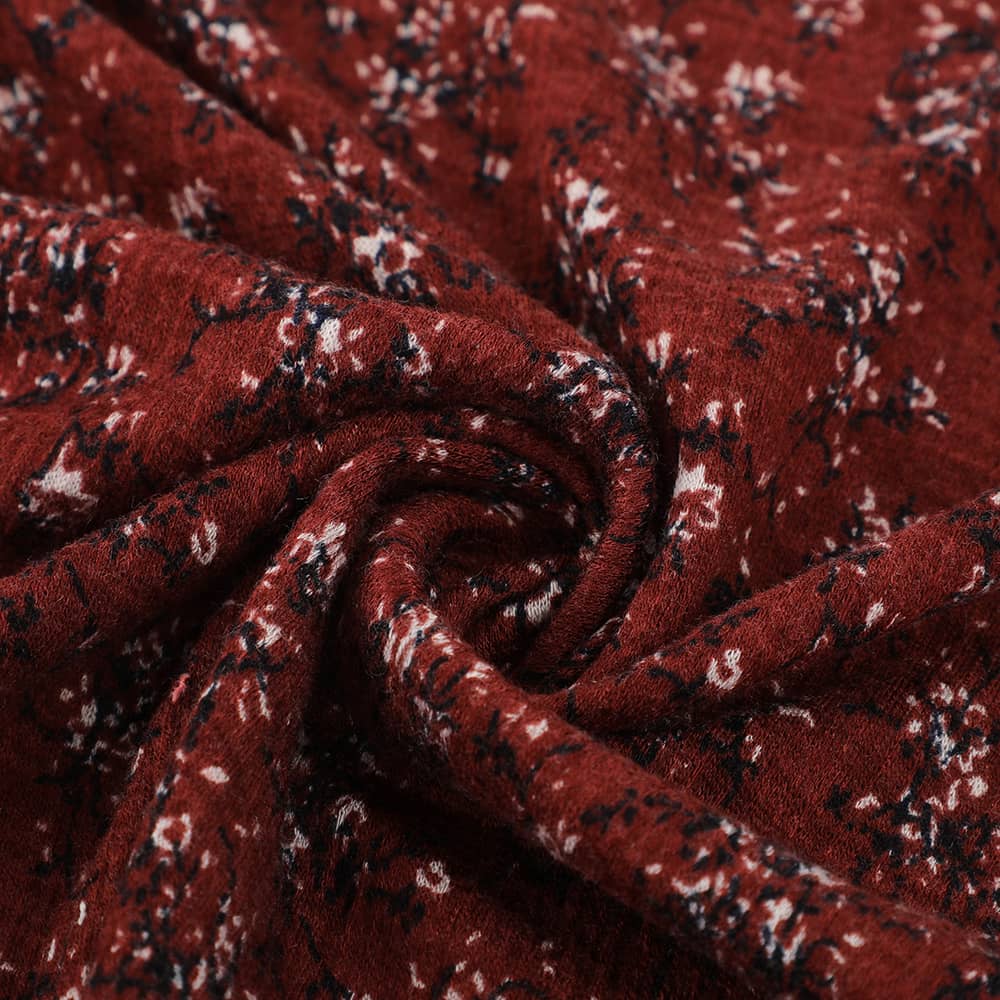
Polyester Knitted Printed Fabric: How Can Functionality and Aesthetics Achieve the Perfect Balance?
In the modern textile industry, polyester knitted printed fabric has become an increasingly important segment of the market due to its outstanding performance and wide application potential. As a high-performance synthetic fabric, it not only offers excellent abrasion resistance, wrinkle resistance, and colorfastness, but also allows for rich visual effects and diverse designs through printing processes, meeting the needs of fashion, sportswear, and home textiles.
Material Properties and Fiber Advantages
Polyester knitted printed fabric is made from polyester fibers using a knitting structure. Compared to woven fabrics, knitted fabrics naturally provide elasticity, offering significant advantages in stretchability, recovery, and wearing comfort. The molecular structure of polyester fibers gives the fabric the following properties:
- High Strength and Abrasion Resistance: Polyester fibers have excellent tensile strength, maintaining fabric integrity even under frequent stretching or friction.
- Heat Resistance and Wrinkle Resistance: After thermal setting, polyester knitted fabrics are stable and retain shape, suitable for long-term wear and printing processes.
- Moisture Management and Quick-Drying: Modern surface modification technologies improve moisture absorption and wicking, enhancing comfort.
- Printability and Color Reproduction: The loose structure of knitted fabrics provides an ideal surface for printing, and polyester fibers are compatible with multiple printing and dyeing techniques, ensuring bright and durable patterns.
As a result, polyester knitted printed fabric is widely used in sportswear, casual wear, and home textiles, combining functionality with visual appeal and maintaining long-term competitiveness in the market.
Production Process
The production of polyester knitted printed fabric mainly includes spinning, knitting, printing, and finishing, with each stage directly affecting the final quality of the fabric.
-
Spinning Stage
Polyester fibers are first spun into filament or staple fibers and then twisted to improve yarn strength and uniformity. Shaoxing Tangsi Textile Co., Ltd. has a mature R&D team capable of optimizing fiber blends for different applications, offering natural fiber, high-performance fiber, and blended products. -
Knitting Stage
Knitting methods include warp knitting and weft knitting. Weft-knitted fabrics offer better elasticity, while warp-knitted fabrics provide higher stability. Controlling needle spacing, gauge, and machine speed ensures fabric uniformity, smoothness, and softness. -
Printing Stage
Printing distinguishes polyester knitted printed fabric from ordinary knitted fabrics. Common printing techniques include heat transfer, digital printing, coating, and reactive printing. Heat transfer printing offers high efficiency and vibrant colors, while digital printing achieves complex patterns and multi-color gradients. Shaoxing Tangsi Textile Co., Ltd. also provides customized printing solutions to ensure high standards in color fidelity and pattern precision. -
Finishing Stage
Finishing processes include setting, softening, anti-shrinkage, anti-static, and abrasion resistance treatments. By precisely controlling temperature, pressure, and chemical agents, fabric hand feel, elasticity, and durability are significantly enhanced.
Applications and Market Demand
With its combination of functionality and aesthetics, polyester knitted printed fabric is widely applied in various industries:
- Apparel Industry: Sportswear, casual clothing, functional garments, and fashion printed collections benefit from the fabric’s comfort, breathability, and design versatility.
- Home Textiles: Bedding, curtains, and cushions leverage the fabric’s softness and printability for visually appealing interior decoration.
- Outdoor Products: Tents, parasols, and waterproof backpacks require fabrics with abrasion resistance, quick-drying, and UV protection.
Market trends indicate a growing consumer demand for environmentally friendly and sustainable fabrics, driving innovation in high-performance polyester knitted printed fabrics and promoting development in green manufacturing technologies.
Environmental Protection and Sustainability
Sustainability has become a core concern in the textile industry. Traditional printing and dyeing processes can generate wastewater, emissions, and chemical residues. To address these issues, leading companies adopt measures such as:
- Green Fiber Selection: Using recycled polyester or bio-based polyester reduces petroleum resource consumption.
- Eco-Friendly Printing Technology: Implementing waterless printing, low-energy digital printing, and low-pollution dyes reduces environmental impact.
- Full-Process Management: From raw material procurement to final delivery, a comprehensive environmental monitoring system ensures compliance with wastewater and emission standards.
Shaoxing Tangsi Textile Co., Ltd. actively promotes the development of the eco-friendly material industry chain, striving to reduce environmental pollution and achieve sustainable development. The company also maintains its own warehouse stocked with a wide range of ready-to-ship fabrics to meet diverse customer demands.
Industry Challenges and Innovation Directions
Despite the advantages of polyester knitted printed fabric, the industry faces several challenges:
- Technological Upgrade Pressure: Printing technologies and knitting equipment must continuously evolve to meet high-precision and complex pattern requirements.
- Stricter Environmental Regulations: Companies must optimize production processes to comply with increasingly stringent environmental standards.
- Market Differentiation Needs: Consumers demand higher quality in fabric hand feel, elasticity, breathability, and pattern diversity, requiring continuous product innovation.
Polyester knitted printed fabric combines functionality, design diversity, and broad applicability, becoming a key direction in the textile industry. Through controlled spinning, knitting, printing, and finishing processes, along with eco-friendly and sustainable practices, this fabric demonstrates strong market potential in apparel, home textiles, and outdoor products.