English
 Español
 日本語
日本語 Deutsch
In the world of fashion, the difference between an ordinary garment and an exceptional one often begins with a single element: fabric. For anyone involved in selecting, designing, or purchasing a women dress, understanding how to identify premium materials is not just a skill—it is a necessity. Premium fabrics determine how a dress looks, feels, drapes, wears, and ages. Yet, without technical knowledge, even experienced buyers can be misled by clever marketing or superficial softness.
Fiber Origin: The First Indicator of Quality
Every premium fabric starts with its raw material. Natural fibers and high-grade synthetics behave differently from their lower-cost counterparts. For a women dress to achieve premium status, the fiber type and its processing must meet specific standards.
Natural Fibers: The Gold Standard
- Long-staple cotton (e.g., Egyptian or Sea Island type): Produces smoother, stronger, and more lustrous yarns. Short-staple cotton feels rougher and pills faster.
- Fine wools (e.g., Merino, Cashmere, Vicuña): Softness without fragility. A premium wool women dress does not itch; it bends light subtly and recovers from wrinkles.
- Silk (Mulberry, wild silk, or raw silk): Real silk has a natural shimmer, coolness to the touch, and a slight resistance when crushed. Lower-grade silk or blended imitations lack these tactile signatures.
- Linen (high-grade): Long-staple linen feels almost dry and crisp but softens with wear. It has irregular slubs only in deliberately rustic weaves; premium linen uses even, fine yarns.
Synthetic Fibers: Quality Is Possible, But Rare
High-end women dress fabrics can use synthetics, but only specific constructions qualify. Look for:
- Microfiber polyester with a textured, matte finish (not shiny or plastic-like)
- Viscose/lyocell from certified sources: Feels close to cotton but smoother; drapes fluidly; resists pilling when dense enough (above 180 gsm for dresses)
- Nylon tricot used in luxury knits: Exceptionally smooth, strong, and stretch-recoverable
Avoid These Warning Signs
- Fabrics that feel sticky, overly slippery, or unnaturally stiff.
- Fibers that fuzz after light rubbing (lower-quality short fibers).
- Labels stating “dry clean only” but feeling like low-density polyester.
Fiber quality tiers for women dress fabrics
| Fiber Type | Premium Indicator | Substitution Red Flag |
|---|---|---|
| Cotton | Long-staple, combed, mercerized | Short-staple, coarse hand, slubs |
| Wool | Under 19.5 microns, soft crimp | Prickly, carded only, low twist |
| Silk | 16+ momme weight, continuous filament | Reeled waste silk (nozzle silk) |
| Synthetic | Heathered matte finish, dense weave | Glossy, thin, static-prone |
Weave and Knit Structure: Engineering the Touch
Fiber alone does not guarantee a premium women dress. The construction—woven or knitted—determines durability, breathability, and drape. Premium fabrics use precise, stable constructions that feel substantial without being heavy.
Woven Fabrics for Women Dresses
- Poplin with high thread count (over 200): Crisp yet soft. Counts above 300 indicate luxury, but the weave must be even—no gaps or mis-picks.
- Twill (including gabardine and suiting): Diagonal ribs visible. High-end twill has a clear, consistent angle (45° or steeper). Light reflects off the ridges, not scattered.
- Satin (real charmeuse or duchess): Float yarns on the surface create gloss. Premium satin uses at least 6-end weave (6 harness). A women dress with cheap satin (5-end or less) shows loose threads and snags.
- Crepe: Tight, pebbly surface. Quality crepe holds its texture after crushing; low-grade crepe flattens.
Knit Fabrics for Women Dresses
- Jersey knits: Premium versions use compact yarns and high stitch density (above 28 gauge in fine knits). They hang straight, not bias-skew.
- Ponte di Roma (double knit): Should feel spongy but firm, with no visible laddering at the cut edge. A cheap ponte pills between thighs within a few wears.
- Interlock: Thicker than jersey but smooth both sides. Premium interlock has no diagonal stretch distortion.
Construction Defects to Reject Immediately
- Uneven yarn spacing (visible warp/weft gaps)
- Pulled floats on the back of satin
- Twisted seams when fabric is laid flat
- Excessive stretch in width but not length (unbalanced)
Density and Weight: The Physical Truth
One of the most reliable methods to identify a premium women dress fabric is evaluating its weight per square meter (gsm) or momme (for silk). While exact numbers vary by garment type, certain thresholds separate value from volume products.
Recommended Weight Ranges for Quality Women Dresses
| Fabric Type | Lightweight (spring/summer) | Midweight (transitional) | Heavyweight (autumn/winter) |
|---|---|---|---|
| Cotton | Below 120 gsm – too sheer | 140–200 gsm – premium | Above 220 gsm – structured |
| Linen | 130–160 gsm – crisp | 170–200 gsm – best drape | 210+ gsm – coat-like |
| Silk | 12–16 momme – delicate | 19–22 momme – luxury | 25+ momme – formal dresses |
| Wool | 180–230 gsm – tropical | 240–300 gsm – dress weight | 310+ gsm – heavy suiting |
How to Test Density Without Tools
- Cup the fabric: Premium women dress fabrics spring back slowly after being crushed. Cheap fabrics wrinkle sharply or stay crumpled.
- Hold it to light: Very low density shows scattered light pinholes (not intentional lace). Good weaves appear nearly opaque except for sheer designs.
- Feel the hem: A quality dress hem will feel slightly firmer due to interfacing or self-lining; poor fabrics have limp, wavy hems.
Key insight: High weight does not equal premium if fibers are coarse or weave is loose. Density + fiber fineness = luxury.
Hand Feel and Drape: Subjective, Yet Standardized
Tactile evaluation remains a professional standard in textile laboratories and ateliérs. For a women dress, the hand feel must match the intended design. A stiff linen sundress can be premium; a stiff silk evening dress cannot.
The Five-Scale Hand Test
Smoothness: Run your palm across the surface. Premium fabrics feel either buttery, crisp-dry, or velvety—never sticky, tacky, or artificially slippery.
Coolness: Natural fibers (cotton, linen, silk) feel cool initially. Synthetics feel warm or room-temperature. A premium blend may be neutral.
Compression resilience: Pinch a fold between thumb and forefinger. Release. Luxury fabrics recover ≥90% within two seconds.
Drape quality: Drape the fabric over the back of a chair. Premium weaves form soft, continuous waves without sharp breaks or rigid tubes.
Surface noise: Rub a fold near your ear. High-quality women dress fabrics whisper; low-quality materials rustle like paper or plastic.
Common Hand Feel Deceptions
- “Buttery soft” finishes (chemical softening agents) – wash out after 2–3 cleanings.
- Brushed surfaces (peach skin, sueded) – can mask short-fiber content.
- Starch-laden displays – remove stiffness with a humid hand; if it returns to soft limpness, it was never premium.
Always trust the raw hand after shaking the fabric vigorously (removes temporary finishes). A truly premium women dress maintains 80% of its initial feel after such agitation.
Coloration and Print Integrity
Dye and print quality reveal much about overall fabric grade. Premium fabrics hold color evenly, resist fading, and align prints without misregistration.
Solid Dyes: The Uniformity Check
- Hold the fabric taut under natural light. Rotate 90 degrees. Any lighter/darker streaks (warp and weff shading) indicates poor dyeing control.
- Premium women dress fabrics exhibit metamerism stability—color looks the same under daylight, warm light, and fluorescent light.
- Deep blacks and bright whites are hardest to achieve. A true premium black dress fabric has a blue or neutral undertone, not grayish or greenish.
Prints: Precision Defines Luxury
- Check repeat edges: Do motifs align perfectly? Misalignment by even 1mm is acceptable only in low-cost products.
- Look at the back of the fabric. Premium prints show little to no strike-through (dye bleeding to the reverse), unless intentional for a reversible design.
- Rub a white cloth firmly over the print. No color transfer means properly fixed dyes.
Natural vs. Artificial Luster
- Premium silk or high-count cotton has a soft, directional sheen (changes with viewing angle).
- Cheap luster comes from plastic coatings or calendering (heat-pressed gloss), which vanish after first wash.
Edge Behavior and Selvedge Quality
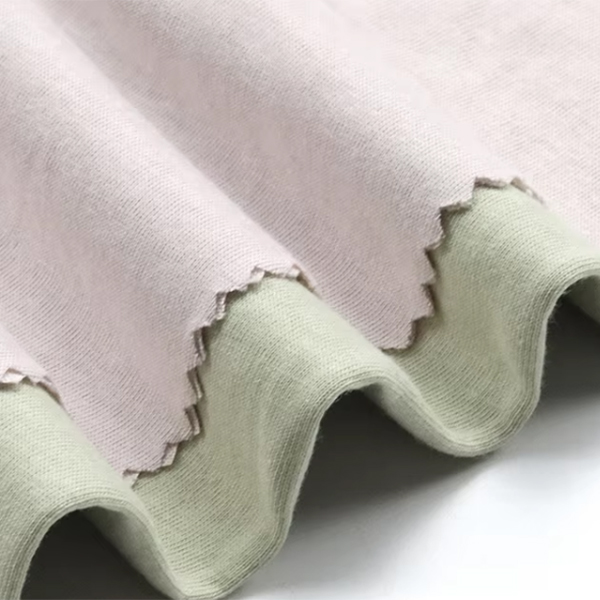
Often overlooked, fabric edges and selvedges tell a story about weaving standards. Industrial women dress fabrics with clean, tight selvedges indicate precision looms and careful handling.
What to Inspect
- Selvedge completeness: Premium woven fabrics have self-finished edges (tighter weave, often with color-coded threads). Fraying, loose, or trimmed selvedges suggest secondary-grade material.
- Edge curl: Knit fabrics that curl aggressively into a tube have uneven tension. Premium knits lie almost flat at the cut edge.
- Selvedge pucker: Wavy selvedges mean the fabric was overstretched during finishing, leading to distorted seams later.
Selvedge Width Consistency
Measure width in three places. Variation under 1% is excellent for natural fibers; over 3% signals low-grade stretching or shrinkage control.
Shrinkage and Dimensional Stability
A premium women dress fabric is engineered to maintain shape after laundering (or dry cleaning, according to care instructions). While all natural fibers shrink slightly, the amount and predictability matter.
Professional Quick Test (without washing)
Fold a sample, mark a 10cm segment, stretch gently to 11cm, release. Premium fabrics return to within 1mm of original length. Low-quality fabrics stay stretched (growth) or rebound past original (construction relaxation).
Known Behaviors of Premium Materials
- High-quality cotton: Maximum 3% shrinkage, concentrated in first wash.
- Wool crepe: Low felting shrinkage when tightly woven.
- Viscose/lyocell: Minimal shrinkage if pre-shrunk; otherwise up to 7%, but evenly.
- Silk charmeuse: Nearly zero shrinkage; length loss indicates weighting (metallic salts added to increase weight—a defect).
If a women dress feels surprisingly heavy but the fiber is silk, check for weighting. Weighted silk cracks and loses strength quickly.
Pilling Resistance and Abrasion
Pilling—small fiber balls on the surface—kills the perceived quality of any women dress. Premium fabrics either resist pilling entirely or shed pills quickly without forming permanent clusters.
Lab-Inspired Field Test
Rub a 5cm area with medium pressure using a pumice stone or rough canvas for 20 circular strokes. Check:
- No pills: Excellent (typical of long-staple cotton, linen, high-twist wool)
- Small pills that brush off easily: Acceptable after first wears
- Dense, anchored pills: Low quality, will worsen
Construction Factors That Reduce Pilling
- High twist yarns (harder to fuzz)
- Compact spinning (reduces protruding fiber ends)
- Weave density above 30 ends/cm (woven) or tight knit loops
Avoid women dress fabrics that feel artificially “fuzz-free” with a waxy coating. The coating wears off, exposing short fibers that pill aggressively.
Finishing Treatments: Necessary vs. Masking
Finishing can elevate a decent fabric to premium, or hide defects in poor fabric. Learn to distinguish durable finishes from deceptive ones.
Beneficial Finishes (Premium Indicators)
- Mercerization (cotton): Permanent luster, increased strength, better dye affinity.
- Sanforization (cotton/linen): Pre-shrunk mechanically, not chemically.
- Decatizing (wool): Sets weave, improves drape without stiffness.
- Bio-polishing (cellulosics): Enzymes remove surface fuzz, leaving a clean, smooth feel that lasts.
Masking Finishes (Avoid)
- Silicone softeners: Dissolve after a few washes; originally coarse fabric becomes rough again.
- Resin stiffeners: Used to mimic body in cheap knits; washes out, leaving limp, stretched fabric.
- Optical brighteners: Mask yellowing from low-grade cotton; fade unevenly.
When possible, request a washed sample of the women dress fabric. A truly premium material improves or remains stable after laundering.
Breathability and Moisture Behavior
A premium women dress must be comfortable. While you cannot measure moisture vapor transmission rate without equipment, simple sensory tests work effectively.
The Breath Test
Place the fabric tightly over your mouth and exhale gently. Premium natural fibers let air pass with minimal resistance. A coated synthetic or overly dense weave will balloon or block airflow.
The Drop Test
Put a single drop of water on the surface.
- Immediate absorption without spreading ring: Good for cotton, linen, wool.
- Beading and slow absorption: Treated synthetics or tight weaves.
- Immediate soak-through spot: Very loose weave (low density).
For silk and high-end synthetics, water should not leave a permanent dark mark after drying. If it does, the fabric has poor water repellency combined with uneven dye fixation.
Conclusion: Building a Reliable Fabric Evaluation Routine
Identifying premium women dress fabrics does not require a laboratory. It requires systematic observation and touch. Use this checklist as your professional routine:
- Fiber origin: Confirm long-staple, fine-grade natural fibers or high-quality synthetics.
- Construction integrity: Inspect weave/knit evenness, selvedges, and edge curl.
- Weight and density: Compare to standard premium ranges (see tables above).
- Hand feel and drape: Apply the five-scale test; avoid deceptive finishes.
- Color and print quality: Check uniformity, bleed, and luster stability.
- Stability tests: Quick stretch recovery and shrinkage simulation.
- Pilling resistance: Gentle abrasion trial.
- Finishing authenticity: Distinguish permanent from masking treatments.
- Breathability: Simple moisture and air flow checks.
Passing 8 out of 9 indicates a reliably premium women dress fabric. Remember: price alone never guarantees quality. A moderately priced fabric made with long fibers and a stable weave will always outperform an expensive fabric with short fibers, high twist, and excessive chemical finishing.
By mastering these skills, you protect your investments, elevate your product standards, and contribute to a market where substance outranks surface. In the end, the best women dress is not the one with the highest thread count or the most famous label—it is the one made from fabric that respects both the wearer and the craft.